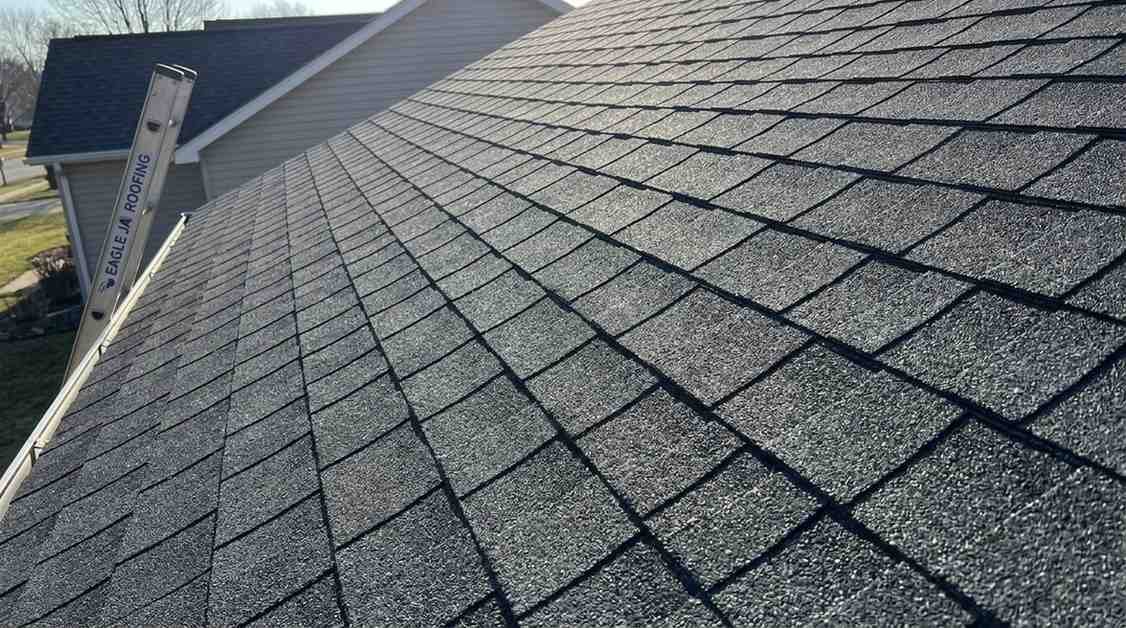
How Roof Age Impacts Structural Safety Over Time
When we think about our homes, we often focus on what’s at eye level: the kitchen cabinets, the flooring, or the fresh coat of paint in the living room. But the most critical component of your home’s “skeleton” is sitting right above your head.
At Eagle JA Roofing, we’ve spent years climbing ladders and crawling through attics, and if there is one thing we’ve learned, it’s this: a roof is not a static object. It is a living, aging shield that undergoes constant stress.
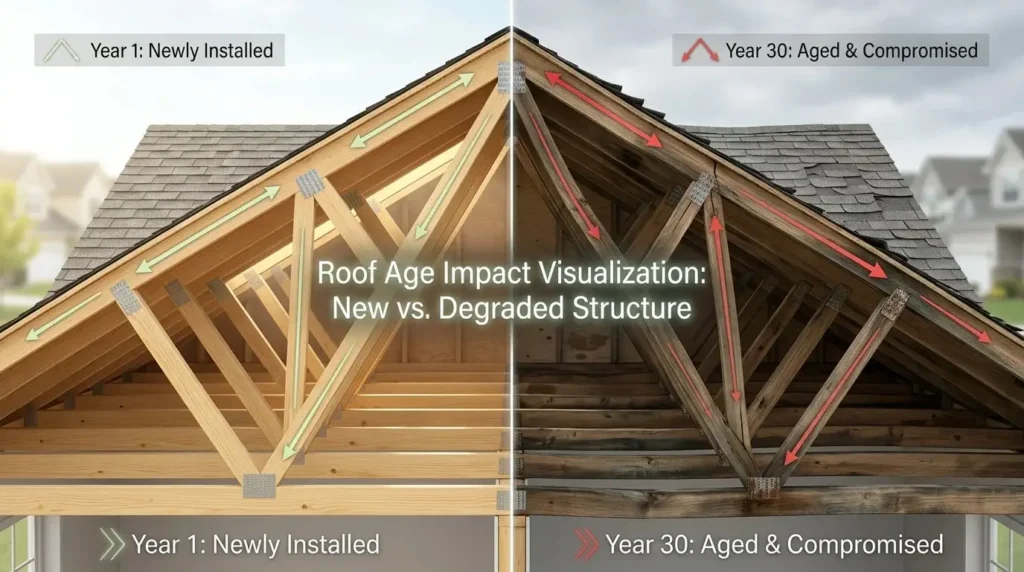
Understanding roof age safety concerns is about more than just avoiding a drip in the pan during a thunderstorm.
It’s about the silent, gradual shift from a protective barrier to a potential liability. If you’ve been wondering, “How long does a roof last structurally?” or if that slight dip in your roofline is something to worry about, this guide is for you.
The Biological Clock of a Roof: Lifespan vs. Integrity
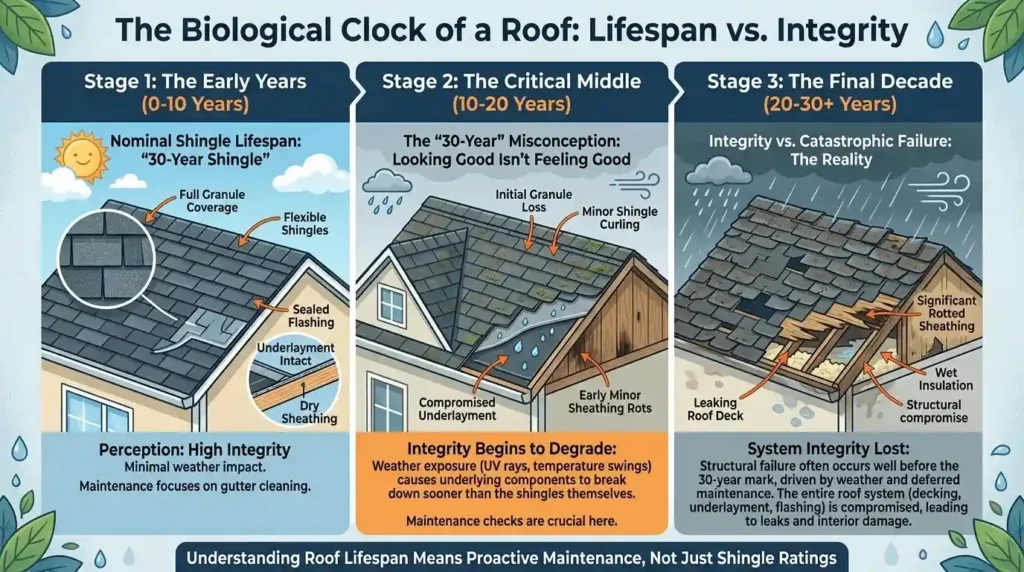
A common misconception is that a “30-year shingle” means you don’t have to worry about your roof for three decades.
In reality, roof life expectancy factors are far more complex. While the shingles might stay attached, the roof lifespan structural integrity can begin to degrade much sooner, depending on weather exposure and maintenance.
The Three Stages of Roof Aging:
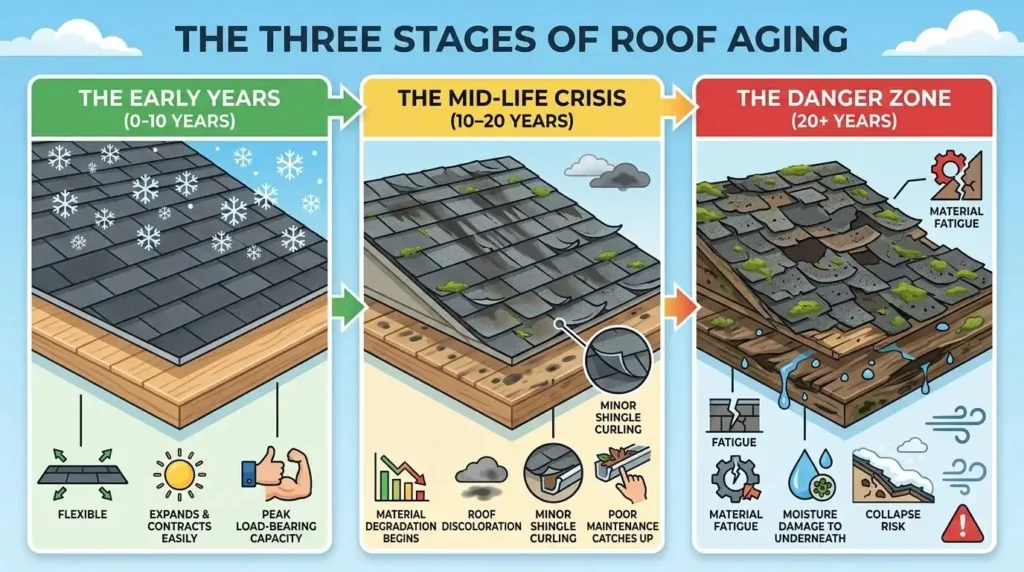
- The Early Years (0-10 Years): The roof is flexible. Shingles expand and contract easily with the sun. The load-bearing capacity of the roof is at its peak.
- The Mid-Life Crisis (10-20 Years): Material degradation begins. You might see roof discoloration or minor shingle curling. This is where poor maintenance starts to catch up with you.
- The Danger Zone (20+ Years): The materials have reached material fatigue. The wood underneath has likely seen some level of moisture damage, and the collapse risk begins to climb, especially in regions with heavy snow or high winds.
Red Flags: Old Roof Safety Signs You Can’t Ignore
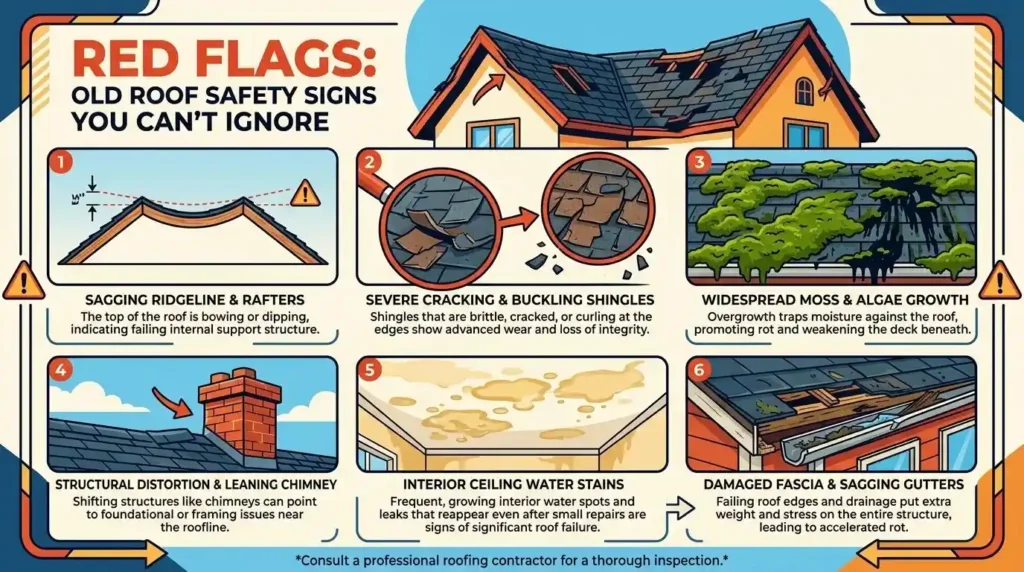
As a homeowner, you don’t need to be an engineer to spot structural roof failure signs. You just need to know where to look. Here are the warning signs that your roof is transitioning from “old” to “unsafe.”
1. The “Wave” (Roof Sagging Signs)
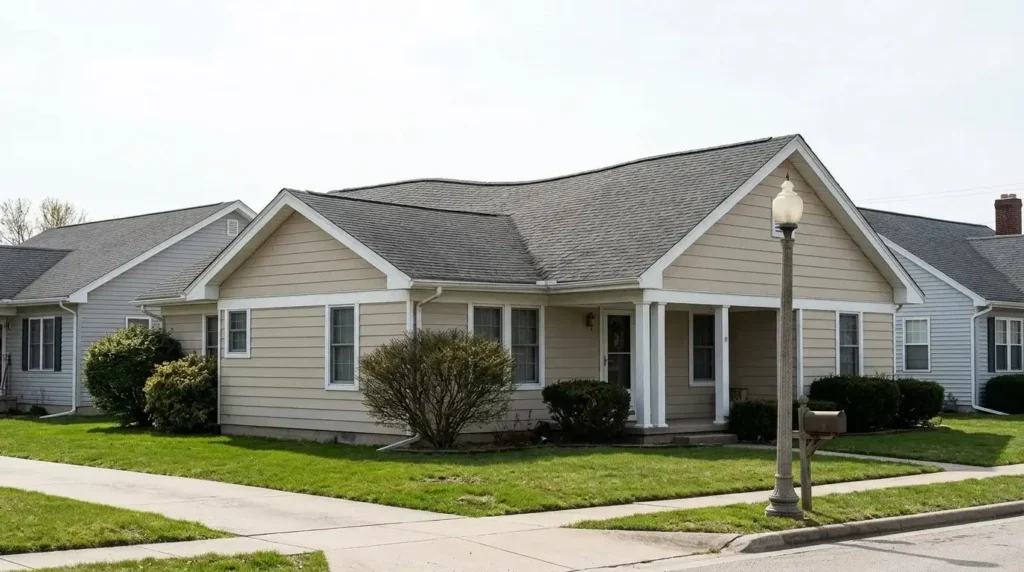
If you stand back at the curb and notice a dip, curve, or “swale” in the roofline, this is a critical structural collapse warning sign.
This usually indicates that the attic support is weakening. Whether it’s a cracked rafter or a rotted ridge beam, a sagging roof means the internal frame can no longer support the weight of the materials.
2. Interior Whispers (Ceiling Cracks and Mold)
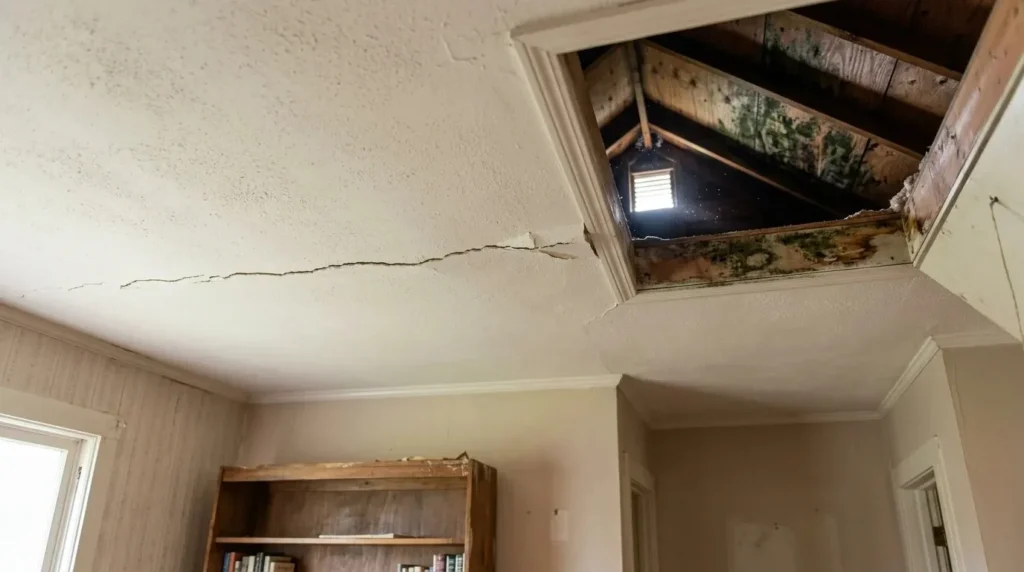
Sometimes the roof tells you it’s failing from the inside. Ceiling cracks that run across the width of a room often indicate that the roof is “spreading” and pushing outward on your walls.
Furthermore, persistent mold growth in the attic is a sign of long-term water infiltration damage, which eats away at the “bones” of your home.
3. Material Fatigue: The Shingle Story
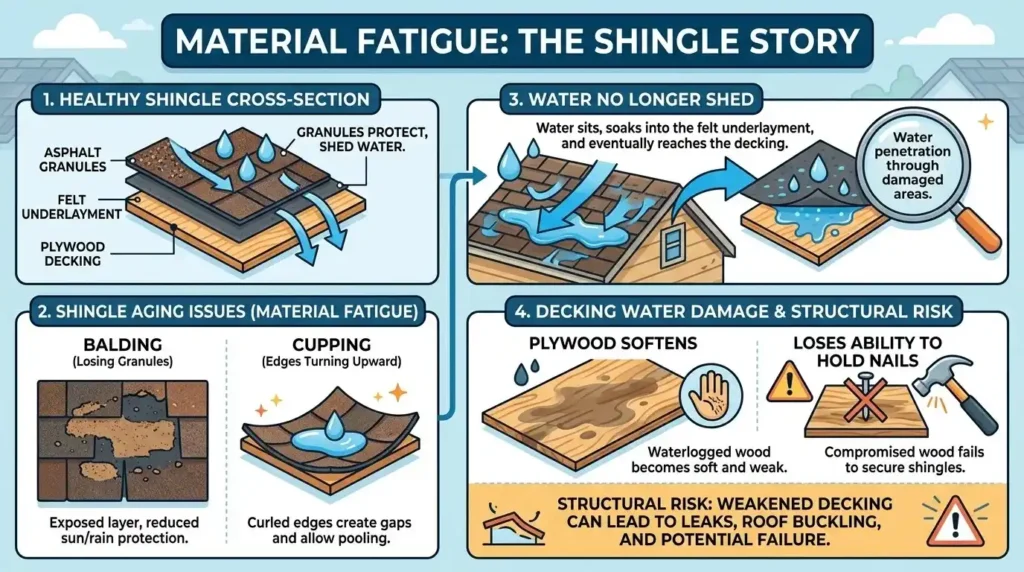
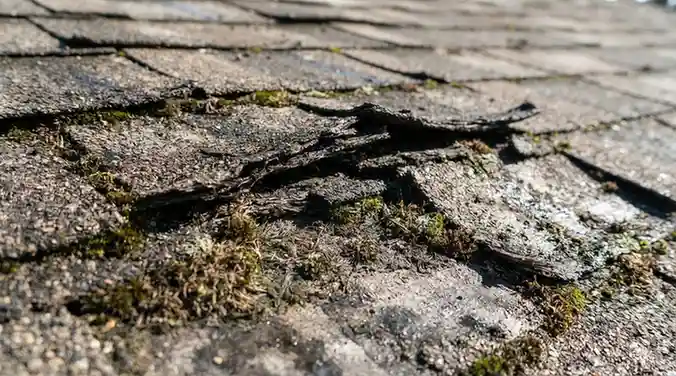
Shingle aging issues like “balding” (losing granules) or “cupping” (edges turning upward) mean the shingle is no longer shedding water.
Instead, water sits, soaks into the felt, and eventually reaches the decking. This leads to water damage structural risk, where the plywood softens and loses its ability to hold nails.
The Domino Effect: Why “Just a Small Leak” Isn’t Small
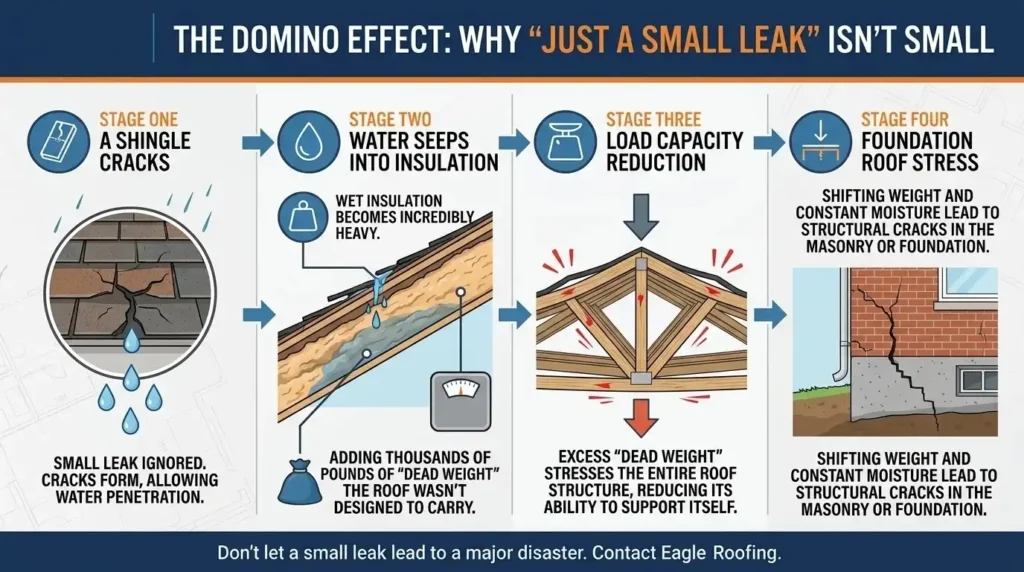
At Eagle JA Roofing we often see homeowners ignore a small leak because “it’s only in the garage” or “it only drips when it rains hard.” However, aging roof problems operate on a domino effect.
- Stage One: A shingle cracks.
- Stage Two: Water seeps into the insulation. Wet insulation becomes incredibly heavy, adding thousands of pounds of “dead weight” that the roof wasn’t designed to carry.
- Stage Three: This weight leads to load capacity reduction.
Stage Four: The constant moisture leads to foundation roof stress, where the shifting weight of the roof actually begins to crack the masonry or foundation of the house.
Evaluating the Damage: Partial Repair vs. Replacement
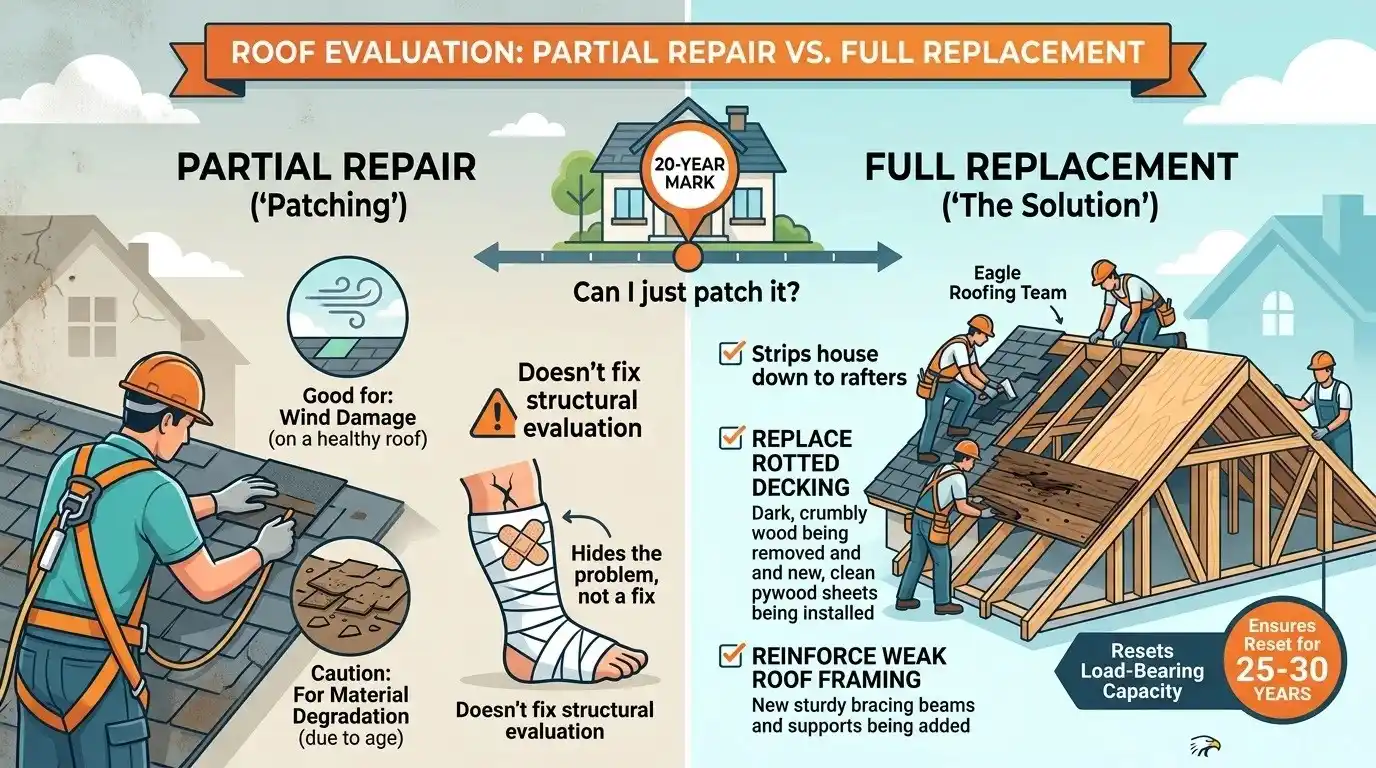
When you hit the 20-year mark, you’ll face the big question: Can I just patch it?
A partial repair is great for a roof that suffered wind damage but is otherwise healthy. However, if the issue is material degradation due to age, patching is like putting a Band-Aid on a broken leg.
It might hide the problem, but it doesn’t fix the structural evaluation of the system. A full replacement allows a team like Eagle JA Roofing to strip the house down to the rafters. This is the only way to:
- Replace rotted decking.
- Reinforce weak roof framing.
- Ensure the load-bearing capacity is reset for another 25-30 years.
Weather Impact on an Old Roof
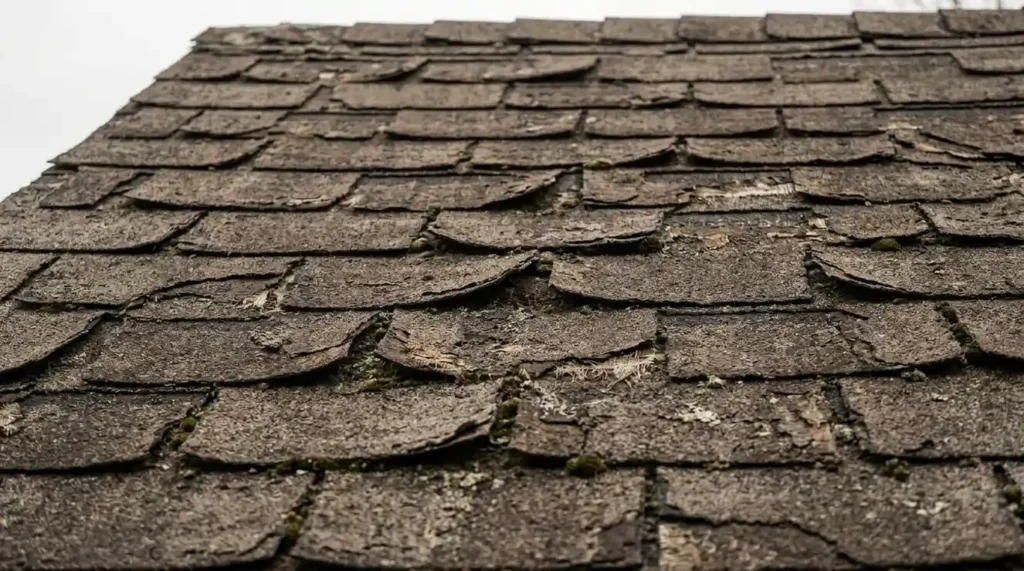
An old roof is a vulnerable roof. In our area, we deal with everything from scorching summer heat to heavy winter ice.
- The Heat Factor: UV rays bake the oils out of shingles, making them brittle.
- The Ice Factor: An aging roof is prone to “ice damming.” When water freezes at the eaves, it forces itself up under the shingles. If your roof is old, that water goes straight into your wall cavities, causing water infiltration damage that you won’t even see until the drywall starts to crumble.
Maintenance: The Fountain of Youth for Your Roof
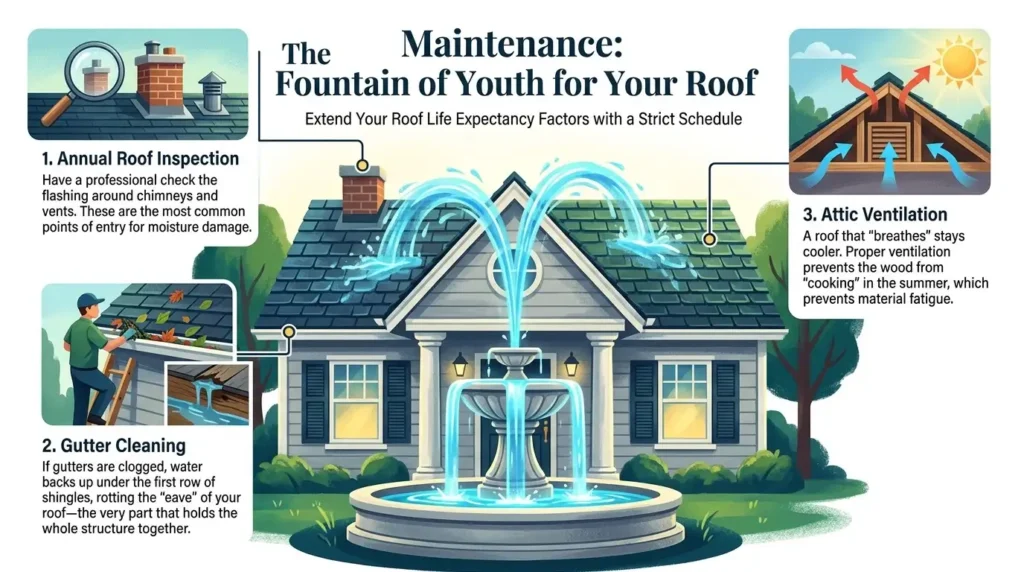
You can extend the roof life expectancy factors by following a strict maintenance schedule.
- Annual Roof Inspection: Have a professional check the flashing around chimneys and vents. These are the most common points of entry for moisture damage.
- Gutter Cleaning: If gutters are clogged, water backs up under the first row of shingles, rotting the “eave” of your roof—the very part that holds the whole structure together.
- Attic Ventilation: A roof that “breathes” stays cooler. Proper ventilation prevents the wood from “cooking” in the summer, which prevents material fatigue.
Why Structural Safety Matters Today
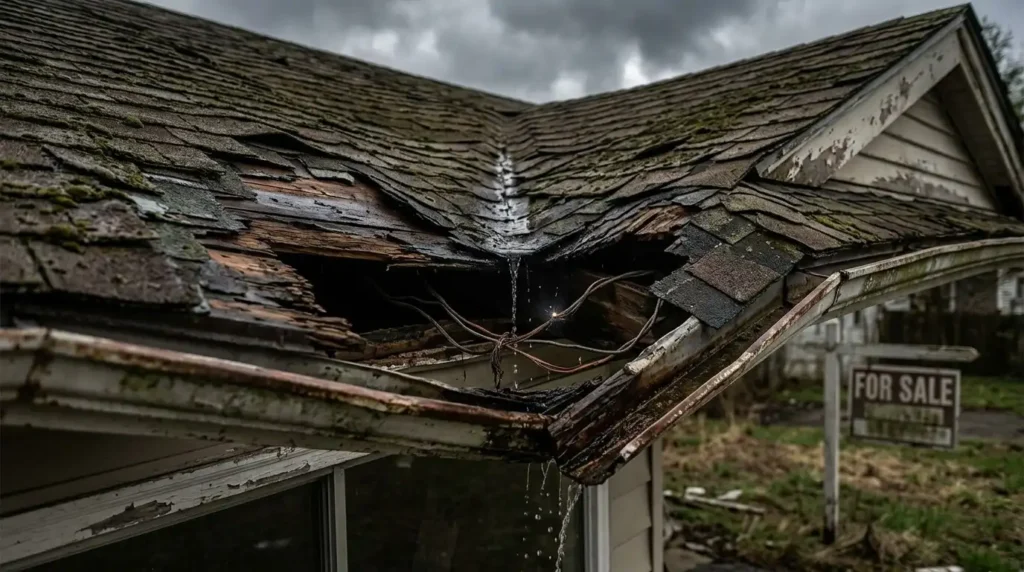
We’ve seen the devastating results of a roof that stayed on “one year too many.” Beyond the physical danger of a collapse, an unsafe roof can lead to:
- Insurance Denials: Many insurance companies will no longer cover homes with roofs older than 20 years.
- Electrical Hazards: Water leaking onto attic wiring is a leading cause of house fires.
- Lost Property Value: A sagging roof is the first thing a home inspector will flag, often killing a potential sale instantly.
The Eagle JA Roofing Promise
At Eagle JA Roofing, we don’t just “slap on shingles.” We are specialists in structural evaluation. When we come to your home, we look at the pitch, the rafters, the ventilation, and the drainage.
We help you understand exactly when a roof becomes unsafe so you can make an informed decision for your family.
Your roof is the only thing standing between your loved ones and the elements. Don’t let roof deterioration over time turn into a crisis.
Whether you need a simple maintenance schedule or a full structural overhaul, we have the expertise to ensure your home remains a sanctuary.
Is your roof showing its age? Don’t wait for the next big storm to find out if it’s safe.
Contact us now for a professional roof inspection and structural safety check. Let us give you the peace of mind that only a strong, secure roof can provide.