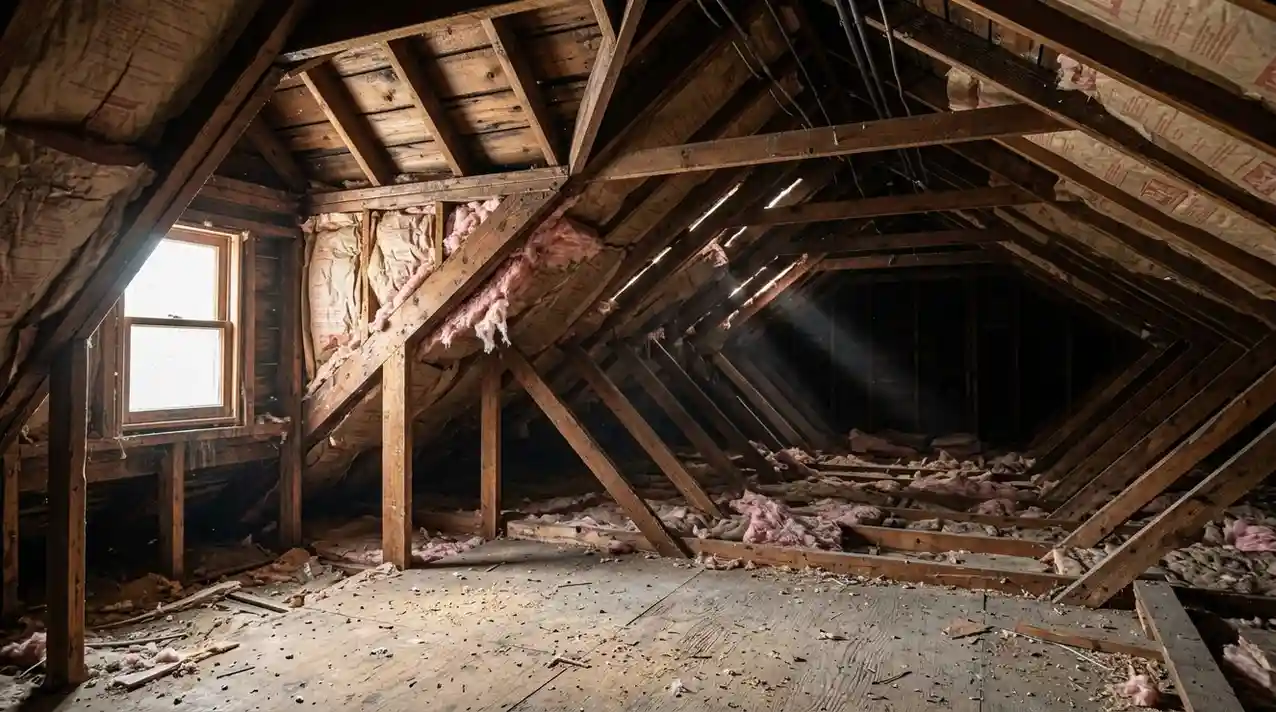
How Attic Conditions Reveal Roof Problems Early
When was the last time you actually spent more than five minutes in your attic? For most of us, it’s that dusty, cramped “out of sight, out of mind” zone where we stash holiday decorations and old suitcases. But here’s the truth: your attic is the most honest part of your home.
It doesn’t have the drywall, paint, or siding that hides a multitude of sins. It’s raw, it’s exposed, and it is the absolute best place to find out if your roof is struggling.
At Eagle JA Roofing, we’ve seen it time and time again: a homeowner calls us because a ceiling in the master bedroom is sagging, only to find out the roof has been leaking for three years.
If they had just peeked into the attic once or twice a season, that massive repair bill could have been a simple, affordable patch.
Your attic is an early warning system. If you know how to read the signs, you can catch attic roof problem signs before they ever touch your living space. Here is your guide to performing a DIY “attic physical” to keep your home healthy.
The “Flashlight and Nose” Test
Before we dive into the technical details, start with your basic senses. When you step into the attic, take a deep breath. It should smell like dry wood and dust.
If you encounter a heavy, damp, or musty smell in the attic, your “Check Engine” light is officially on.
Next, grab a high-powered flashlight. You aren’t just looking at the floor; you’re looking at the “ceiling” of the attic—the underside of your roof. This is where the story begins.
1. Water Stains: The Fingerprints of a Leak
Water is sneaky. It rarely travels in a straight line. It might enter through a cracked shingle near the peak, run down a rafter, and finally drip onto your insulation ten feet away.
- Attic Water Stains: Look for dark, tea-colored streaks on the plywood (your roof decking). These are often dry to the touch if it hasn’t rained recently, but the stain is a permanent record of a leak.
- Dripping Water: If it’s raining while you’re up there, look for the “glimmer.” Water reflects light. Even a tiny, slow drip is an emergency leak repair in the making.
- The “Nail Test”: Look at the ends of the nails poking through the wood. Are they rusted? Do they have white, crusty mineral deposits? If so, you have a moisture problem. Even if it’s not a “hole,” you likely have condensation in the attic caused by high humidity.
2. Insulation: The Sponge of Your Home
Insulation is designed to trap air, not water. When insulation gets wet, it’s like a wet wool sweater—it gets heavy, loses its fluff, and stops keeping you warm.
- Wet Insulation: If you see areas where the pink or grey fluff looks matted, sunken, or clumped together, water has been there.
- Attic Moisture Roof Problems: Check the insulation specifically around “penetrations”—places where pipes, chimneys, or fans go through the roof. These are the most common spots for signs of roof damage in attic because the flashing (the metal seal) around them can fail over time.
3. Mold and the Mystery of the “Hot Attic.”
Many people think mold only happens because of a hole in the roof. Actually, some of the worst attic mold roof leak signs come from the inside.
- Mold due to poor airflow: If you see black speckling or white fuzzy growth on the wood, your attic isn’t breathing. This happens when poor attic ventilation traps hot, moist air from your bathroom or kitchen. That air hits the cold roof deck and turns into water.
- A Hot Attic: In the summer, if your attic feels like a literal oven, your ventilation is failing. This heat doesn’t just make your AC work harder; it “bakes” your shingles from the inside out, shortening their lifespan by years.
4. Structural Red Flags: Sagging and Daylight
This is the “big stuff.” If you see these signs, you don’t just leak; you might have a structural issue.
- Sunlight Through the Attic Roof: This one is simple. If it’s a sunny day and you turn off your flashlight, you should see total darkness. If you see tiny pinpricks of light—like stars in the night sky—you have holes. Water follows light. If light gets in, rain gets in.
- Sagging Roof Deck: Look at the lines of your roof decking. Do the boards look like they are bowing or dipping between the rafters? Sagging roof boards or soft decking are signs that the wood has been wet long enough to have lost its strength. This is a major warning sign roof needs repair immediately.
- Cracked Rafters: While rare, a heavy snow load or a falling branch can crack the internal “ribs” of your roof. If you see a split in a large beam, the integrity of your home is at risk.
5. The Winter Warning: Ice Dams
For those of us in colder climates, winter provides its own set of clues.
- Ice Dam Damage: If you notice a thick ridge of ice at the edge of your roof and then find water stains in the attic near the gutters, you have an ice dam. This happens when your attic is too warm, melting the snow on the roof, which then refreezes at the cold edge. That frozen “dam” forces liquid water up under your shingles and into your home.
Why a DIY Inspection Isn’t Always Enough
Knowing how to inspect attic for roof damage is a fantastic skill for any homeowner, but it’s only half the battle.
Some issues, like subtle roof decking damage or the early stages of flashing failure, are hard to spot without a professional eye (and a professional ladder).
At Eagle JA Roofing, we believe in proactive care. We don’t want to come to your house when the ceiling has already collapsed. We want to find that damp wood or musty smell today and fix it for a fraction of the cost.
When to Call the Experts
If your attic exploration turns up any of the following, it’s time to reach out:
- Any sign of mold: Mold spreads fast and can become a health hazard.
- Daylight visible through the roof: You are one storm away from a disaster.
- Active drips: This isn’t a “wait until next month” problem.
- Sagging wood: This indicates a potential structural failure.
Eagle JA Roofing: Your Local Partners in Protection
Searching for roof repair near me can be overwhelming. You want someone who won’t just slap a shingle on a problem but will actually look at the health of your entire roofing system—including the ventilation and the decking.
We specialize in everything from emergency leak repair to full system replacements. We’ll go into the dark corners of your attic so you don’t have to, providing a clear, honest assessment of what your home needs to stay safe.
The Bottom Line:
Your roof protects everything you love—your family, your memories, and your investment. Spend ten minutes in your attic this weekend.
If you see something that doesn’t look right, give us a call. It’s the smartest move you can make for your home.