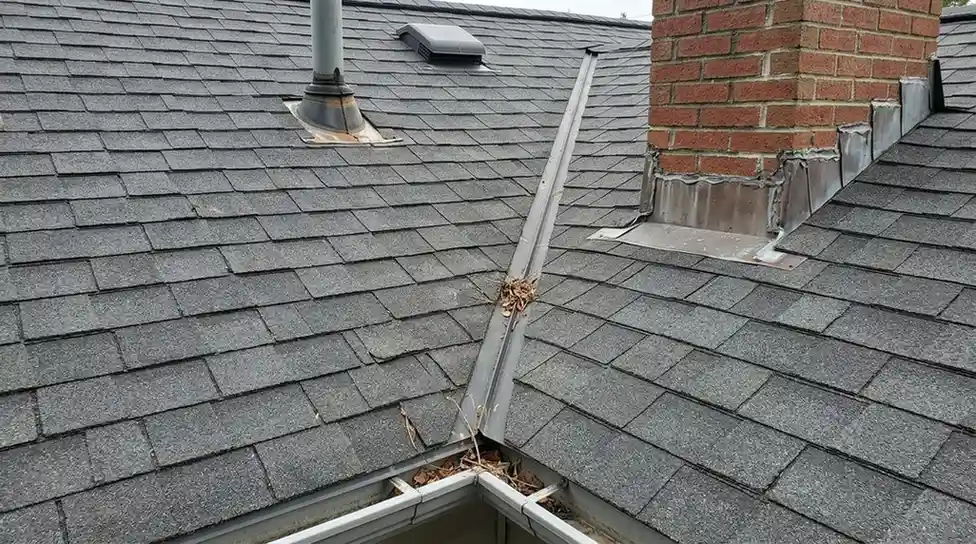
Roof Weak Points That Most Inspections Focus On
Roof Weak Points Inspection
If you’re like most homeowners, you probably don’t think about your roof until you hear the rhythmic drip-drip-drip of a leak during a thunderstorm. Learn how a roof weak points inspection finds leaks, flashing issues, and structural damage early to protect your home from costly repairs.
But at Eagle JA Roofing, we know that by the time a leak makes it to your ceiling, the structural battle has been raging for months, if not years. A roof isn’t just a lid on a box; it’s a complex system of angles, materials, and physics. When we perform a roof weak points inspection, we aren’t just looking for missing shingles—we’re hunting for the “Achilles heels” of your home.
Here is our roof inspection checklist, a weak points guide to help you understand exactly what we look for to keep your home dry and stable.
The Geometry of Trouble: Valleys and Edges
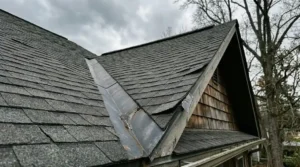
The most beautiful parts of a roof—the gables, the peaks, and the dips—are often the most dangerous.
- Roof Valley Damage Risk: Valleys are where two roof planes meet. They act like a funnel for every drop of rain on your house. If the flashing weak areas in these valleys are corroded or poorly installed, the sheer volume of water will eventually find a way in.
- Roof Edge Damage Risk: The perimeter of your roof is the front line against the elements. We look for wind-uplift-vulnerable areas where a strong gust could catch the edge of a shingle or the drip edge and peel it back like a tin can.
Flashing: The Seal That Fails
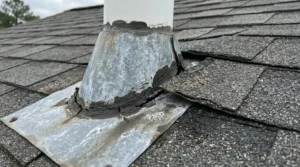
If a roof has a “weakest link,” it’s almost always the flashing. These are the thin metal strips installed around chimneys, vents, and skylights.
- Flashing Zones: These are prime moisture entry points on a roof. Over time, the sealant around these zones dries out and cracks.
- Shingle Failure Zones: We pay close attention to shingle joints and areas where materials transition. If the installation was rushed, these spots become a playground for water infiltration.
The Hidden World: Attic and Structural Integrity
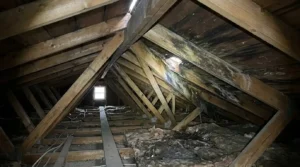
A truly thorough roof structural weak points check requires us to head into the attic. Your roof’s health is often dictated by what is supporting it from underneath.
- Roof Load Bearing Points: We inspect support beams and framing weaknesses. If your roof is sagging, it’s a sign that the load distribution points are compromised.
- Attic Structural Inspection: We look for “daylight” (holes you shouldn’t see), mold, and damp insulation. These are the tell-tale signs of hidden roof structural issues that a simple ground-level view would miss.
Why Structural Checks Matter
| Weak Point | The Risk | The Solution |
| Sagging Areas | Potential collapse or major leaks | Structural reinforcement |
| Moisture in Attic | Rotting rafters and mold | Improved ventilation and sealing |
| Poor Installation | Voided warranties and early failure | Timely repairs by certified pros |
Wind, Stress, and Aging
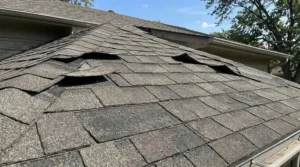
Your roof is under constant pressure. From the weight of snow to the pull of high winds, stress points in the roofing system are always working.
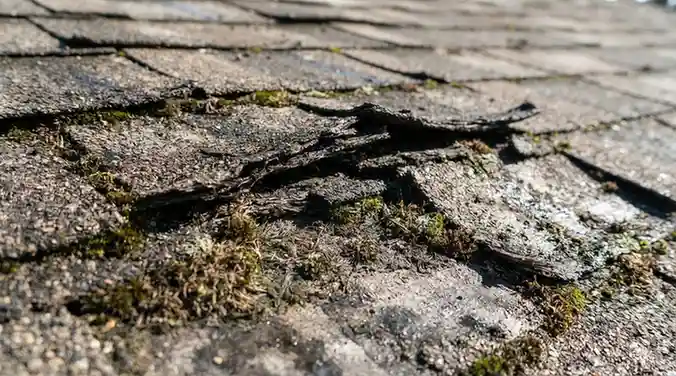
- Wind Damage: We look for shingles that have lost their adhesive bond. Even if they are still attached, a “lifted” shingle is a roof failure weak spot.
- Aging Materials: Granule loss on shingles isn’t just an aesthetic issue—it’s the loss of the roof’s UV protection. We conduct a roof surface evaluation to see if your materials have reached their expiration date.
How to Find Weak Areas in Your Roof
While we always recommend a professional eye, you can spot some roof vulnerability areas yourself:
- Check for Sagging: Look at your roofline from across the street. Is it straight, or does it dip like a swayback horse?
- Inspect the “Joints”: Look for cracked caulk or rusted metal around the chimney.
- The Gutter Test: If your gutters are full of “sand” (shingle granules), your roof is losing its protective layer.
Protecting Your Investment
Identifying roof damage-prone areas early is the difference between a minor patch and a $20,000 replacement.
Regular maintenance and sealing weak points are the most cost-effective ways to extend the life of your home.
At Eagle JA Roofing, we don’t just “look” at roofs; we analyze them. Our roof weak spots inspection guide is designed to catch the small problems before they become catastrophes.
Don’t wait for the leak. Contact us now for a comprehensive evaluation of your home’s structural integrity and ensure your roof is ready for whatever the weather brings.