7 Structural Roof Problems Every Homeowner Should Know
A safe and secure roof is a crucial foundation of your home. While it does help protect its inhabitants from harsh weather, it plays a much more important role in maintaining your home’s overall structural integrity.
Over time, an aged or poorly installed roof can experience structural issues. These issues can sometimes be hard to spot on your own.
Minor leaks, small dips, or cracks in your ceiling may seem harmless at first, but they are a sign of severe structural damage hidden in your attic framing.
These telltale signs can lead to devastating and costly structural collapse. However, the good news is that it’s extremely rare for a roof to collapse without warning.
To ensure we avoid this entirely, here is a guide to the critical signs of roof structural damage to look out for to protect your home and wallet.
The 7 Structural Roof Problems
There are various factors that can contribute to structural roof problems. Below are 7 of the most common causes of structural roof failure.
-
A Sagging Roof Line (Roof Deflection)
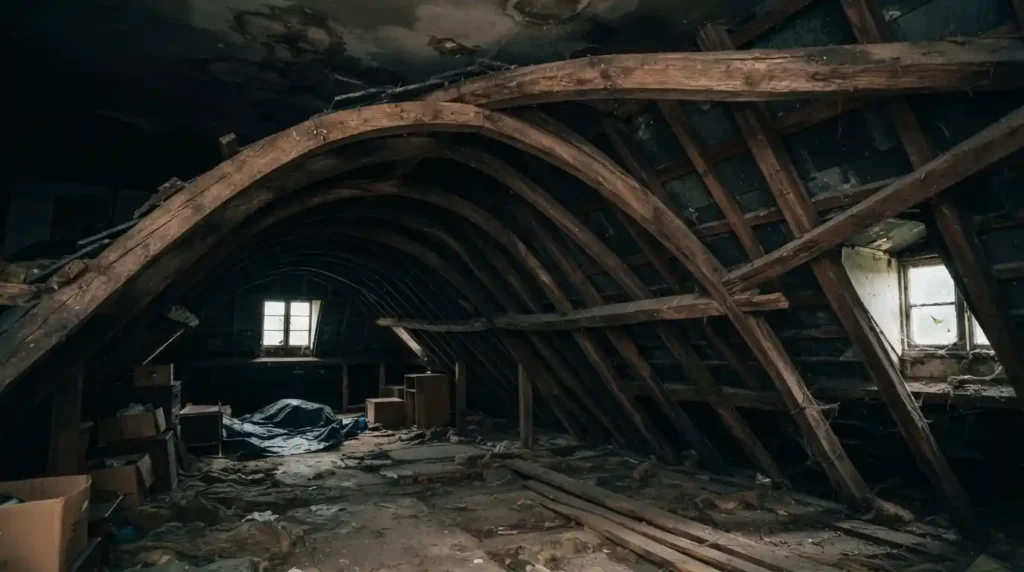
Roof deflection or roof sagging is a critical sign that the roof can no longer support the structural load.
When you pull into your driveway, take a good look at your roofline. The ridge and slopes should be perfectly straight. If you notice a dip, a wave, or a visible curve, you’re looking at roof deflection—and it’s a major red flag for structural roof issues.
A sagging roof is rarely just a shingle problem. It almost always means something is going wrong underneath, specifically with your horizontal rafters or the engineered triangular roof trusses that form your roof’s skeleton.
When these supports weaken from age, poor design, or years of heavy pressure, the whole system begins to sink.
Can it be fixed? If the dip is isolated to one small spot, a targeted sagging roof repair (like reinforcing or “sistering” the weak wood) might do the trick.
But if the sag runs across a large section of your roof framing, it points to deeper roof structural damage signs that require professional roof reinforcement before it becomes dangerous.
-
Compromised Roof Decking Damage
Think of your roof decking (the plywood or OSB sheets nailed to your rafters) as the foundation for your shingles. It creates the flat, solid surface that keeps everything secure.
But when a hidden leak breaks through, that foundation becomes the first victim of moisture damage.
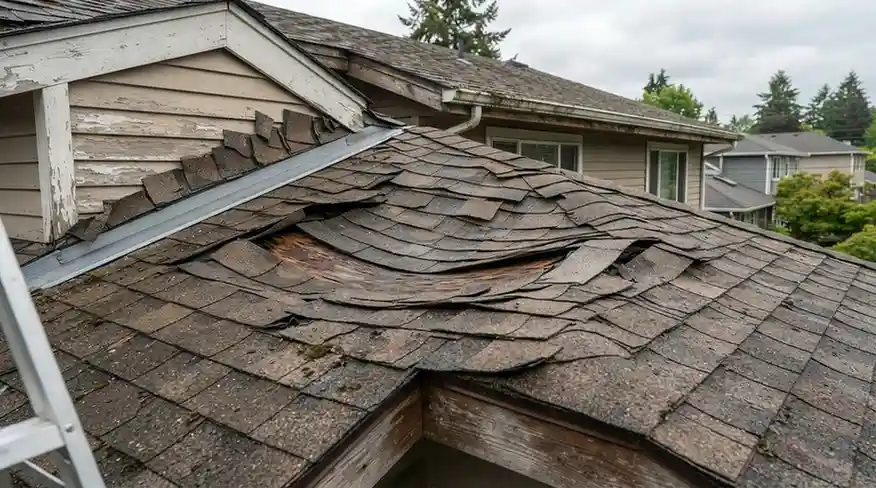
Water intrusion quickly turns strong, structural wood into a soft, spongy mess. If you ever walk on your roof and feel a spot that gives or feels bouncy under your boots, you’re dealing with roof decking damage.
Over time, trapped humidity and direct water exposure warp the wood, pull nails loose, and rot the sheets completely.
When decking is compromised, it can no longer safely hold the weight of your shingles—or the weight of a roofing crew.
-
Damaged or Failing Roof Trusses & Rafters
The woodwork inside your attic bears the entire weight of your roofing system. Whether your home relies on traditional rafters or pre-built roof trusses, any damage to this framing threatens the structural integrity of your entire house.
Roof truss damage usually looks like cracked, split, or completely broken wooden beams. While regular wear and tear plays a part over the decades, we usually see two main culprits behind this:
- Poor construction: Substandard wood or bad weight calculations when the house was built.
- DIY mistakes: Homeowners or uncertified handymen cutting or altering the attic framing to make room for extra storage, a drop-down ladder, or AC ducts.
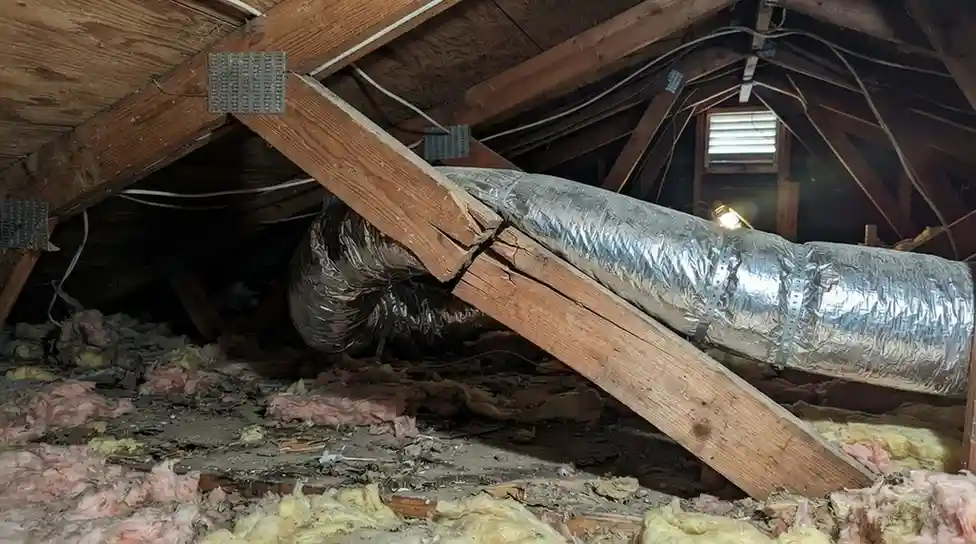
Trusses are precision-engineered. Cutting into even one small support piece shifts massive amounts of weight to areas that weren’t built to handle it, causing serious roof framing problems.
-
Water Intrusion, Wood Rot, and Mold
Water is patient, and it is the ultimate enemy of timber. While a sudden leak can ruin your living room ceiling drywall, it’s the slow, unnoticed water damage that quietly ruins the load-bearing strength of your wooden framing over time.
When wood stays damp in a dark, unventilated attic, fungi move in and cause wood rot. Rotting wood loses its density, becomes brittle, and eventually crumbles under pressure.
It’s a smart habit to check your roof support beam damage zones during a routine attic look-through.
If you see dark water stains, white fuzzy mold, or wood that crumbles when poked with a screwdriver, your roof’s support system is actively failing.
-
Foundation Movement & Roof Settlement
It might seem strange to look at the ground when diagnosing a roof issue, but your home operates as a single, connected unit.
When the soil shifts or settles beneath your house, that foundation movement ripples all the way to the top, causing roof settlement.
As the foundation moves, your load-bearing walls can shift or tilt slightly outward, literally pulling away from the roof framing. You’ll usually notice secondary signs of this inside the house before you see it on the roof:
- Drywall cracks are spreading where the walls meet the ceiling.
- Interior doors that suddenly stick, drag, or won’t close.
- Gaps are opening up between the trim and the wall.
If your structural issues are born in the foundation, fixing the roof shingles won’t solve the root problem—the ground-level structure needs attention first.
-
Pest Infestations (Termite & Carpenter Ant Damage)
Termites and carpenter ants love dark, damp wood, which makes a leaky or poorly ventilated attic their ideal home.
Over months and years, these pests eat away at your home’s framing, leaving behind hollowed-out beams that look fine on the outside but are completely empty on the inside.
This pest activity leads to severe roof framing problems, destroying your home’s bones from the inside out.
Because this damage happens behind insulation or deep within structural timbers, it often goes unnoticed until major roof support issues pop up.
Regular attic inspections are key to catching termite damage early—look out for mud tubes, discarded insect wings, or fine piles of wood dust before the wood is damaged beyond saving.
-
Excessive Roof Load (Environmental & Material Strain)
Every roof is designed with a specific weight limit in mind. When you force a roof to carry weight beyond that engineered limit, you get an excessive roof load, which can lead to a sudden and dangerous failure.
This usually happens because of two things:
- Harsh Weather: Heavy snow load or massive ice dams building up during a brutal winter storm.
- Over-roofing: Nailing a brand-new layer of shingles directly on top of an old layer to save on a tear-off fee.
Leaving old shingles on adds thousands of pounds of dead weight to your attic framing. If you add a heavy winter storm on top of that double layer of roofing, it can push the system past its breaking point.
Keep an eye out for roof collapse warning signs, like loud creaking noises from the attic, sagging interior ceilings, or sudden, deep cracks in your drywall.
Diagnosis and Solutions: The Next Steps
Catching a structural issue early saves your home and your budget. Here is how to spot the signs, get a professional diagnosis, and understand the fixes.
The Warning Sign Checklist
Grab a flashlight and check your home for these clear roof structural damage signs:
- From the Yard: A visible dip or wave along your roofline (roof deflection), or a chimney that looks tilted.
- From the Couch: Interior doors that suddenly stick or won’t close, and fresh cracks in your drywall.
- From the Attic: Spongy spots underfoot on the roof (roof decking damage), dark water stains, or cracked wood in your attic framing.
The Professional Steps
If you spot any of these red flags, don’t guess. The professional evaluation process looks like this:
- Attic Inspection: A roofer checks your rafters and roof trusses for twisting, splitting, or moisture damage.
- Structural Roof Inspection: A deeper dive to see how your roof is transferring its weight to your load-bearing walls.
- Engineering Evaluation: For severe issues (like foundation movement), a structural engineering assessment provides an official blueprint of exactly what is required to restore your home’s structural integrity.
The Fixes: What it Takes to Make it Safe
Depending on how far the structural roof damage has gone, solutions generally fall into three categories:
- Roof Reinforcement: If the wood is healthy but sagging under pressure, we can “sister” it—bolting a new, strong beam directly alongside the weak one to double its strength.
- Roof Framing Repair: If you have isolated roof truss damage or localized wood rot from an old leak, we cut out the bad timber and rebuild that specific section of the frame.
- Complete Roof Replacement: If water intrusion or an excessive roof load has broken the majority of your trusses, a full structural rebuild is the only safe option. We tear it down to the bones and rebuild the skeleton from scratch.
FAQs – structural roof issues
What are structural roof problems?
They are serious defects in your roof’s internal skeleton—like the rafters, trusses, or decking—that compromise its ability to safely support its own weight and protect your home.
What causes structural roof damage?
Common culprits include long-term water leaks, wood rot, pest infestations, severe weather loads, original construction flaws, and even foundation shifting.
How can I tell if my roof has structural issues?
Look for a visibly sagging roofline from the outside, or interior signs like cracking drywall, sticking doors, and warped or split wood inside your attic.
Can a sagging roof be repaired?
Yes, if caught early, a sagging roof can often be reinforced by “sistering” healthy lumber alongside the weakened beams to restore its strength.
Is structural roof damage covered by homeowners’ insurance?
It typically depends on the cause; sudden, accidental damage from a storm or fallen tree is usually covered, while damage from long-term neglect or wear and tear is not.
Should I replace or repair a structurally damaged roof?
Isolated issues like a few damaged trusses can usually be repaired, but if wood rot or sagging is widespread across the framework, a complete roof replacement is the safest option.
Can water damage weaken roof framing?
Absolutely. Persistent water intrusion leads to wood rot and mold, which actively eats away at the density and load-bearing strength of your wooden supports.
How often should structural roof inspections be performed?
You should have a professional look at your roof every 3 to 5 years, or immediately following any severe weather events like heavy snow or high winds.
Are structural roof issues dangerous?
Yes, they pose a severe safety hazard because a compromised framework increases the risk of a partial or total roof collapse over your living spaces.
Who should inspect structural roof damage?
You should hire a licensed roofing contractor for an initial assessment or a structural engineer if you need an official engineering evaluation for major structural shifting.
Structural roof issues only hurt your wallet and safety the longer you let them sit. By following our structured guide, you can effectively avoid such devastating and long-term consequences.
Contact Eagle JA Roofing LLC today to schedule a professional roof assessment or engineering evaluation to ensure your home stays safe and secure.