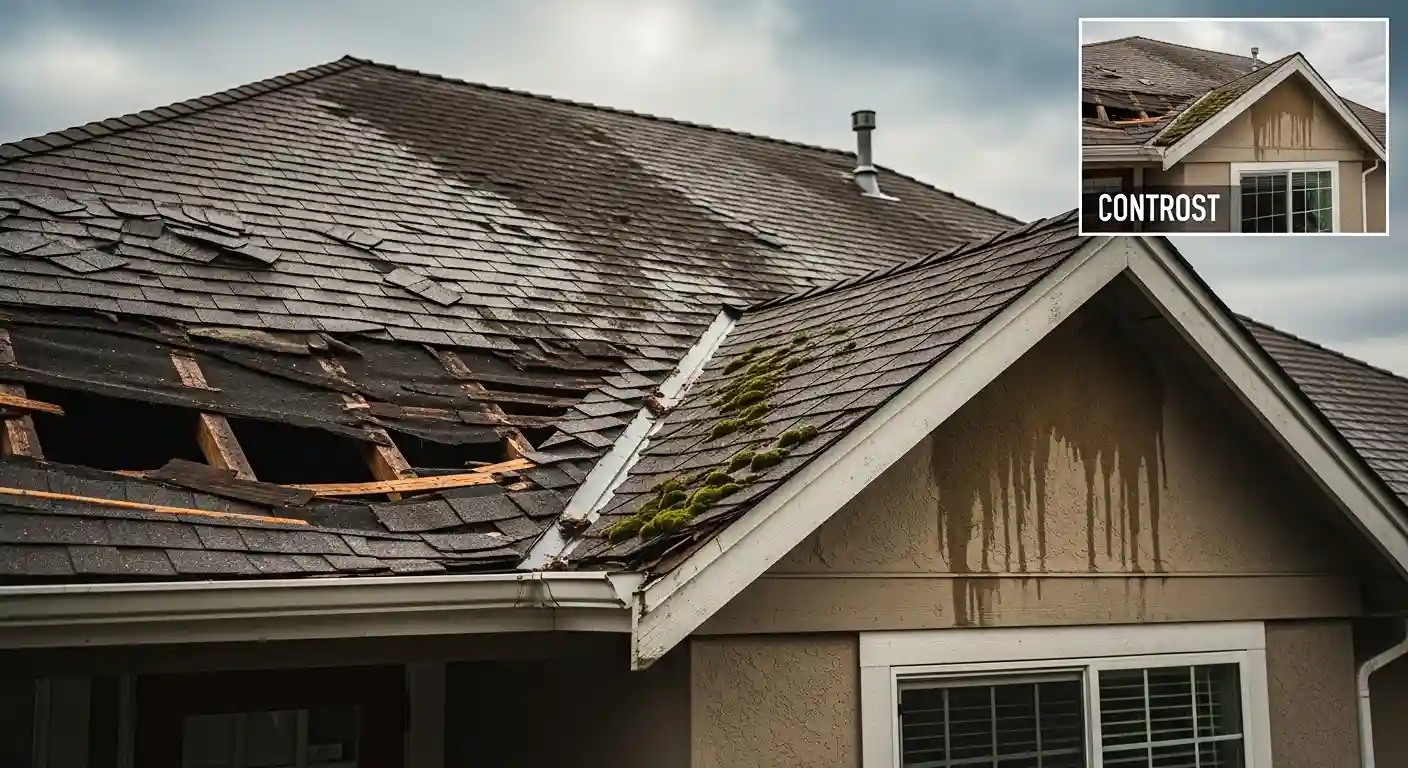
Hidden Roof Damage Signs Homeowners Usually Miss
Your home is likely your most significant investment, and the roof is the shield that protects it. Yet, for most homeowners, the signs of roof damage is “out of sight, out of mind” until a bucket is needed to catch a drip in the living room.
At Eagle JA Roofing LLC, we’ve seen it time and again: a homeowner calls us for a “small leak,” only for us to discover years of accumulated structural roof weakness that could have been prevented.
The reality is that roofs rarely fail overnight. Instead, they give off subtle early roof damage indicators that go unnoticed by the untrained eye.
Detecting these hidden roof damage symptoms early is the difference between a simple repair and a catastrophic financial burden. This guide is designed to help you spot the roof failure warning signs before the next big storm hits.
The “Invisible” Evidence in Your Attic
If you want to know the true story of your roof’s health, don’t look at the shingles first—look at your attic. The attic serves as the “early warning system” for signs of roof leaks and damage.
Moisture Buildup and Humidity:
A healthy attic should be dry and well-ventilated. If you notice a musty odor or if the air feels heavy and damp, you likely have moisture buildup in the attic. This is often caused by failing underlayment or poor ventilation, which traps heat and rot-inducing moisture against your roof deck.
The “Light Test”:
On a bright afternoon, climb into your attic and turn off the lights. If you see pinpricks of daylight peeking through the boards, you have found a direct path for water. Even if you haven’t seen dripping water yet, surface tension allows rain to “crawl” through these gaps.
Mold Spots and Mildew:
Look closely at the rafters and insulation. Mold growth on roof supports is a definitive sign of long-term leakage. Mold doesn’t just damage the wood; it compromises your home’s air quality and indicates that the structural roof weakness is already underway.
Shingle Red Flags: Beyond the Basics
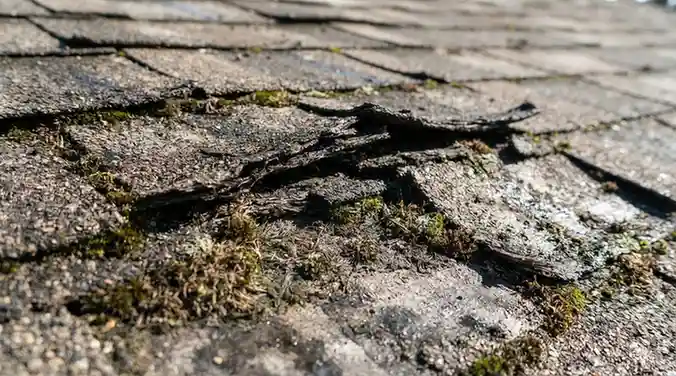
Most people know that missing shingles are a problem. However, shingles that are still attached can still be completely compromised. Here is how to detect roof damage that hides in plain sight:
Granule Loss in Gutters:
Take a look at your downspouts after a heavy rain. If you see a pile of what looks like coarse, dark sand, those are shingle granules. Shingles use these granules to protect against UV rays. Significant granule loss means your shingles are “bald,” brittle, and no longer waterproof.
Wind Uplift and Breaking Seals:
During high winds, shingles can be lifted upward without blowing away. This is called wind uplift, and it breaks the factory sealant strip underneath. Even if the shingle lies back down, it is no longer bonded to the roof, making heavy rain leakage inevitable.
Hail Impact Marks:
After a storm, look for small, circular indentations or discoloration. These “bruises” might look minor, but they fracture the fiberglass mat inside the shingle. Over time, the sun expands these cracks, leading to a leak months after the storm has passed.
Structural Red Flags: When the Bones are Hurting
When a roof begins to lose its integrity, the signs manifest in the home’s silhouette. These roof structural damage signs are critical indicators that you are nearing a total roof failure.
Roof Sagging Signs: Stand back from your house and look at the ridgeline (the very top peak). It should be a perfectly straight line. If you notice a “dip” or a “swayback” appearance, you are seeing roof sagging. This usually points to weak support beams or rotted decking caused by persistent, undetected leaks.
Uneven Roof Surface: If the planes of your roof look “wavy” or lumpy, the wood underneath (the decking) is likely warping from moisture. An uneven roof surface is a precursor to a collapse if left unaddressed.
Interior Structural Cracks: Check the corners of your walls and ceilings on the top floor. New or widening structural cracks in the drywall can indicate that a heavy, water-logged roof is shifting and putting undue pressure on the home’s frame.
The Vulnerable Points: Flashing and Sealants
A roof isn’t just a flat surface; it’s an assembly of joints and intersections. These are the most common areas for storm roof damage to occur.
Flashing Damage:
Flashing is the thin metal installed around chimneys, dormers, and vents to divert water. If this metal is rusted, cracked, or pulling away, it is the #1 cause of ceiling water stains.
Clogged Gutters and Ice Dams:
When gutters are backed up, water has nowhere to go but up. It seeps under the shingles at the eave line, causing rot in the fascia boards and eventually the interior walls. This is often the source of those mysterious water stains on the ceiling that appear far away from the peak of the house.
Summary of Warning Signs & Impact
| Sign of Damage | Where to Look | Potential Consequence |
| Granule Loss | Gutters/Downspouts | Shingle brittleness and UV failure |
| Cracked Shingles | Roof Surface | Immediate heavy rain leakage |
| Sagging Roof | Ridgeline/Attic | Structural roof weakness and collapse risk |
| Mold Spots | Attic Insulation | Rotted wood and health hazards |
| Flashing Gaps | Chimneys/Vents | Rapid interior water damage |
Why a Professional Roof Inspection is Non-Negotiable
The problem with hidden roof damage is that by the time you can see it from the ground, the repair bill has already doubled.
A professional roof inspection by the team at Eagle JA Roofing LLC involves more than just a glance. We use a systematic approach to identify early roof damage indicators that are invisible to the untrained eye.
Our maintenance tips are focused on damage prevention. We believe that a proactive approach—catching a cracked shingle or a loose piece of flashing today—saves our clients thousands of dollars and the massive headache of an emergency replacement during a storm.
Protect Your Home with Eagle JA Roofing LLC
Don’t wait for the first “drip” to hit your floor. If your roof is more than 10 years old, or if your neighborhood has recently experienced high winds or hail, your home may be at risk for hidden roof damage.
At Eagle JA Roofing LLC, we pride ourselves on transparency, quality craftsmanship, and helping our community understand the signs of roof damage before they become disasters. We provide comprehensive assessments that cover everything from storm damage to structural roof weakness.
Is your roof holding up? Give us a call now for a professional inspection. Let’s make sure your shield is strong enough to handle whatever the weather brings next.